
Practical Plays for Restaurant Operators.
Automation, marketing, and operations playbooks — written for independent restaurants and multi-unit groups. Each post ships with one of the workflows in the snapshot.
Restaurants do not lose covers because the food is wrong. They lose them in the gaps: the call that rings out at 7pm on a Friday, the Instagram DM nobody opens until Monday, the four-top that books and never shows, the delighted guest who was never asked for a review. Every article below takes one of those gaps and closes it with a workflow you can actually run during service.
The posts are grouped by the job they do. Reservations and no-shows cover the booking flow end to end, from the AI caller that answers on the second ring to the deposit hold and the reclaim window. Reviews and reputation cover the post-visit ask and the reply that keeps your Google profile active. Loyalty, birthday clubs and win-backs cover the slower work of turning a first visit into a habit. Compliance posts cover the parts that carry real risk: consent language, STOP handling and A2P 10DLC registration before a single text goes out.
Every playbook is written for U.S. independent restaurants and small multi-unit groups, and filed by one of three named writers you can read about on theauthors page. Where a post cites a number, the source is linked, and where a claim is illustrative rather than measured, it says so.
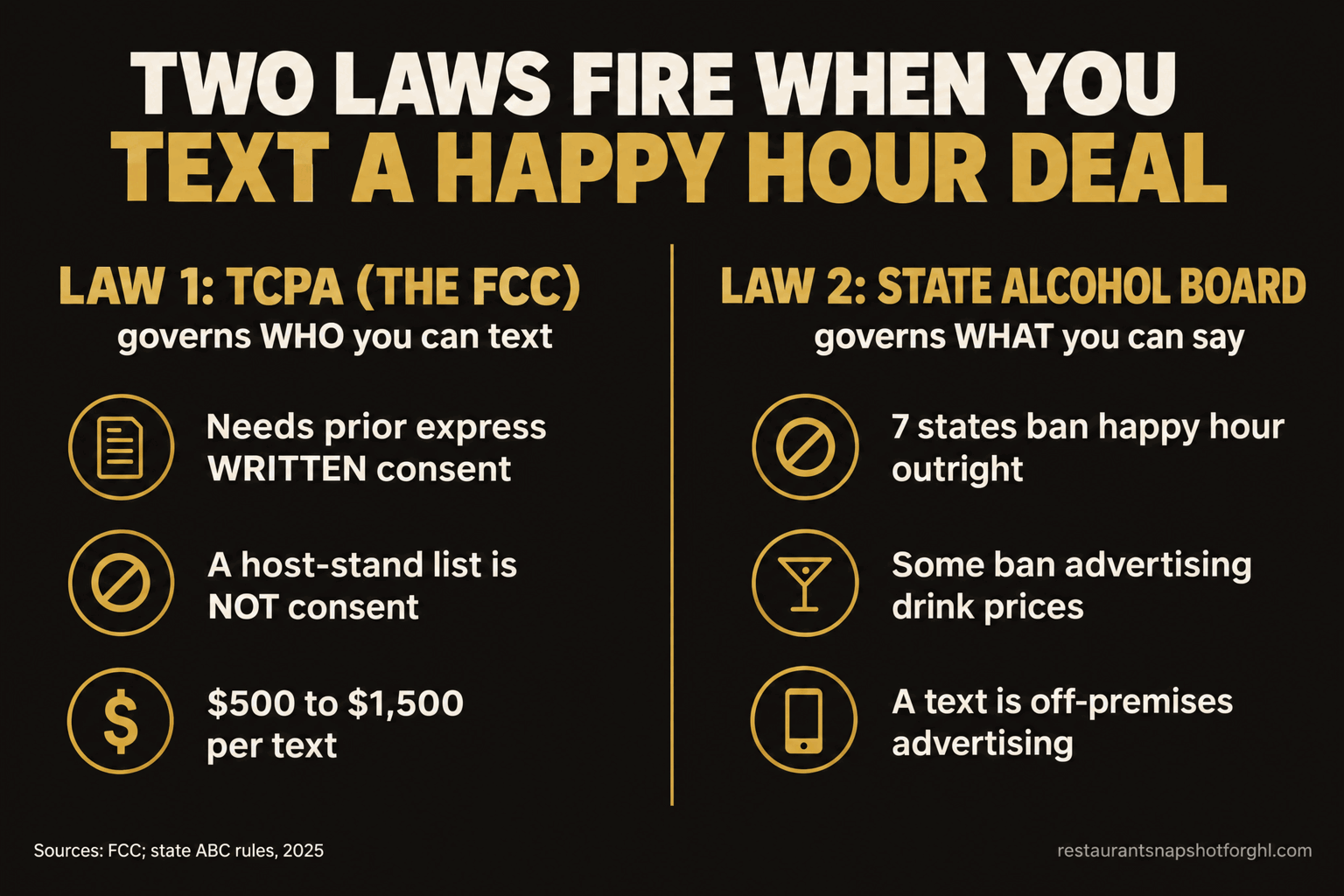
Can You Legally Text Your Guests a Happy Hour Deal? The 2026 Rules, State by State
Texting a drink promo to your guest list triggers two laws at once: the TCPA that governs who you can text, and your state's alcohol-advertising rules that govern what you can say. Here is how to send a happy hour blast legally in 2026, with the consent language and promo copy you can steal.
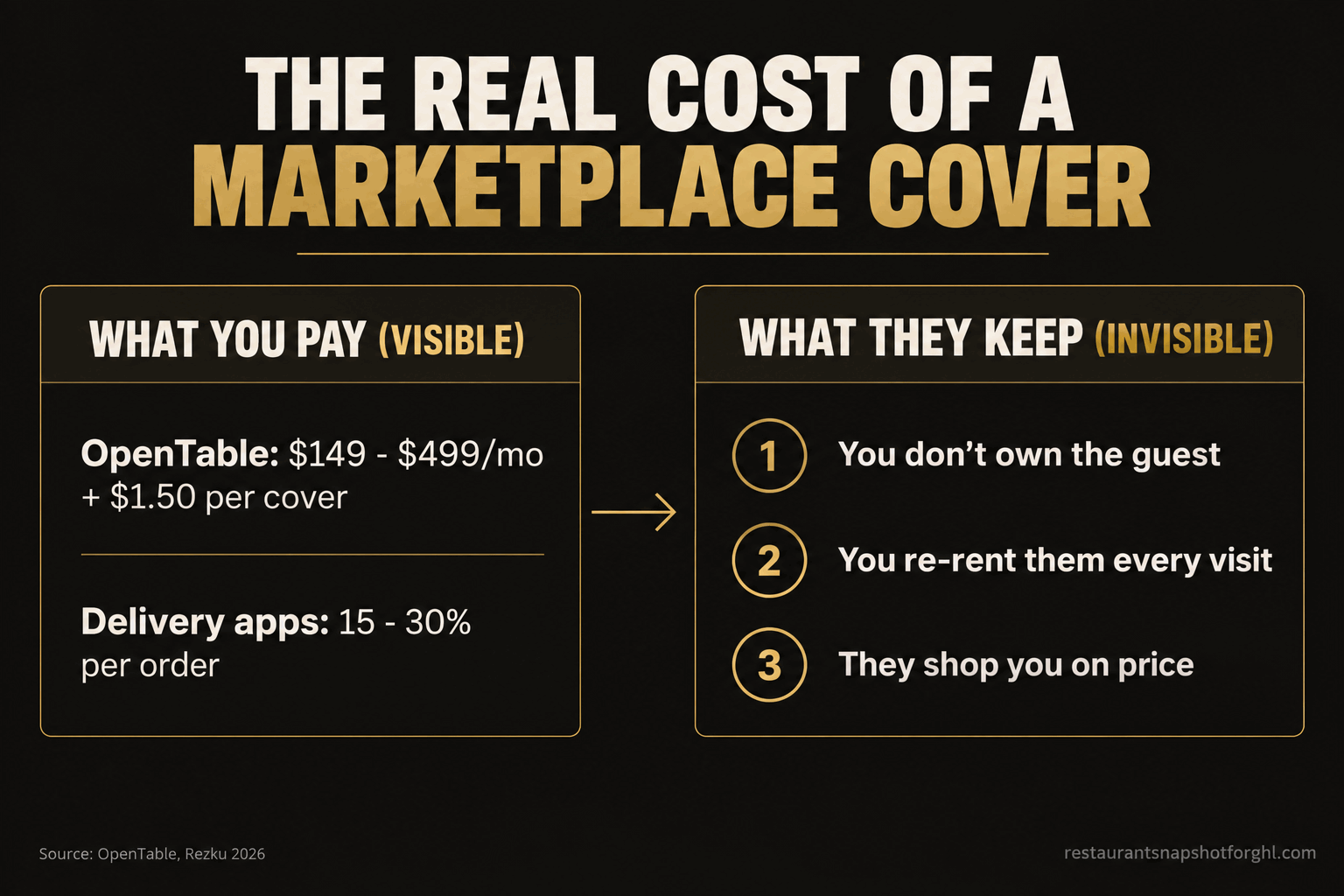
The Real Cost of Every Cover You Book Through Someone Else's Marketplace
A full dining room does not always mean a full bank account. When your covers come through OpenTable, the delivery apps, or a review site, you pay a fee you can see and three costs you cannot. Here is the real per-cover math, why renting your demand keeps your margin thin, and how to start booking tables you actually own.
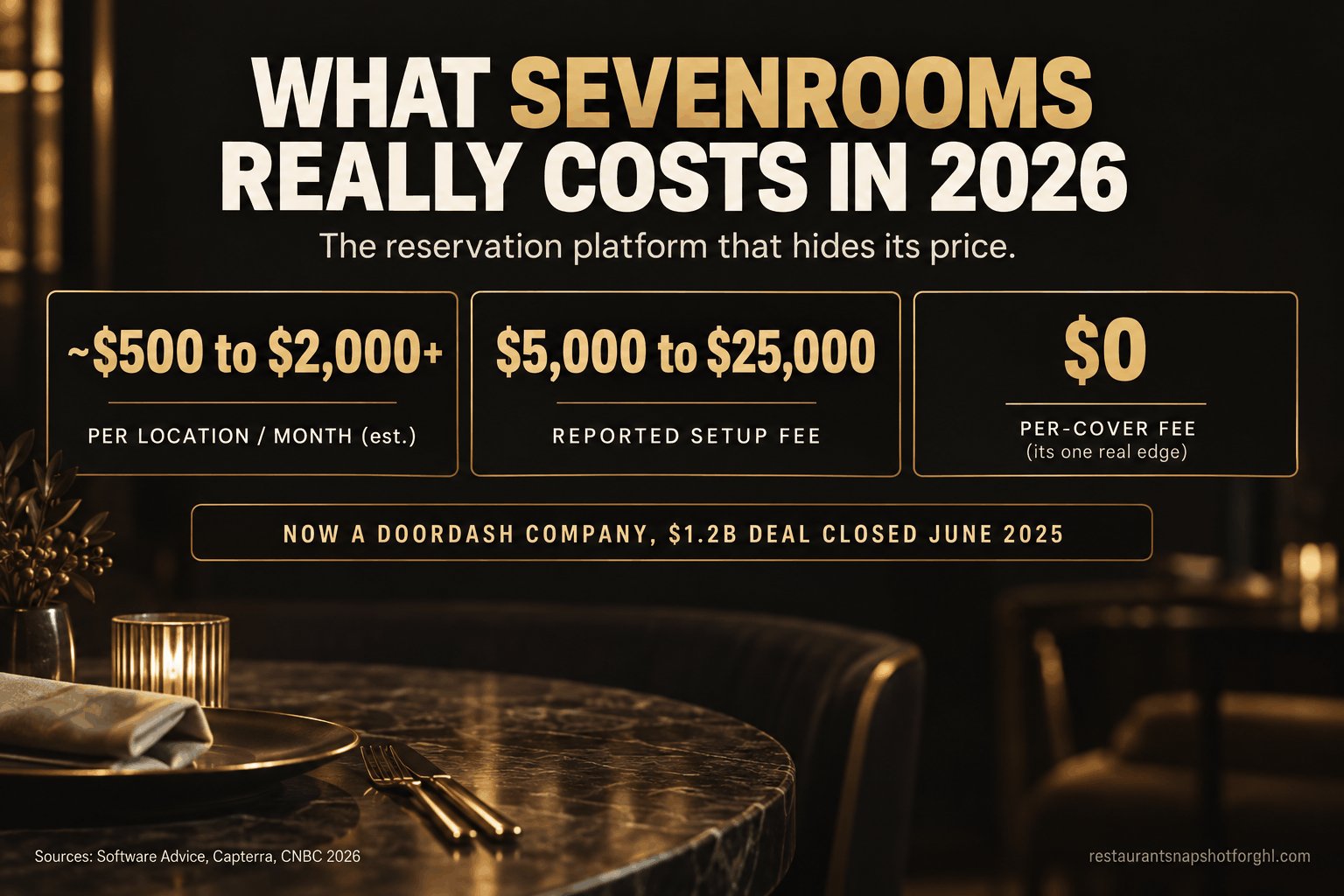
What SevenRooms Actually Costs in 2026 (Now That DoorDash Owns It)
SevenRooms won't publish a price, so here is the honest 2026 teardown: the reported monthly cost, the setup fee and contract nobody mentions, what changed when DoorDash bought it for $1.2 billion, and who should walk away.
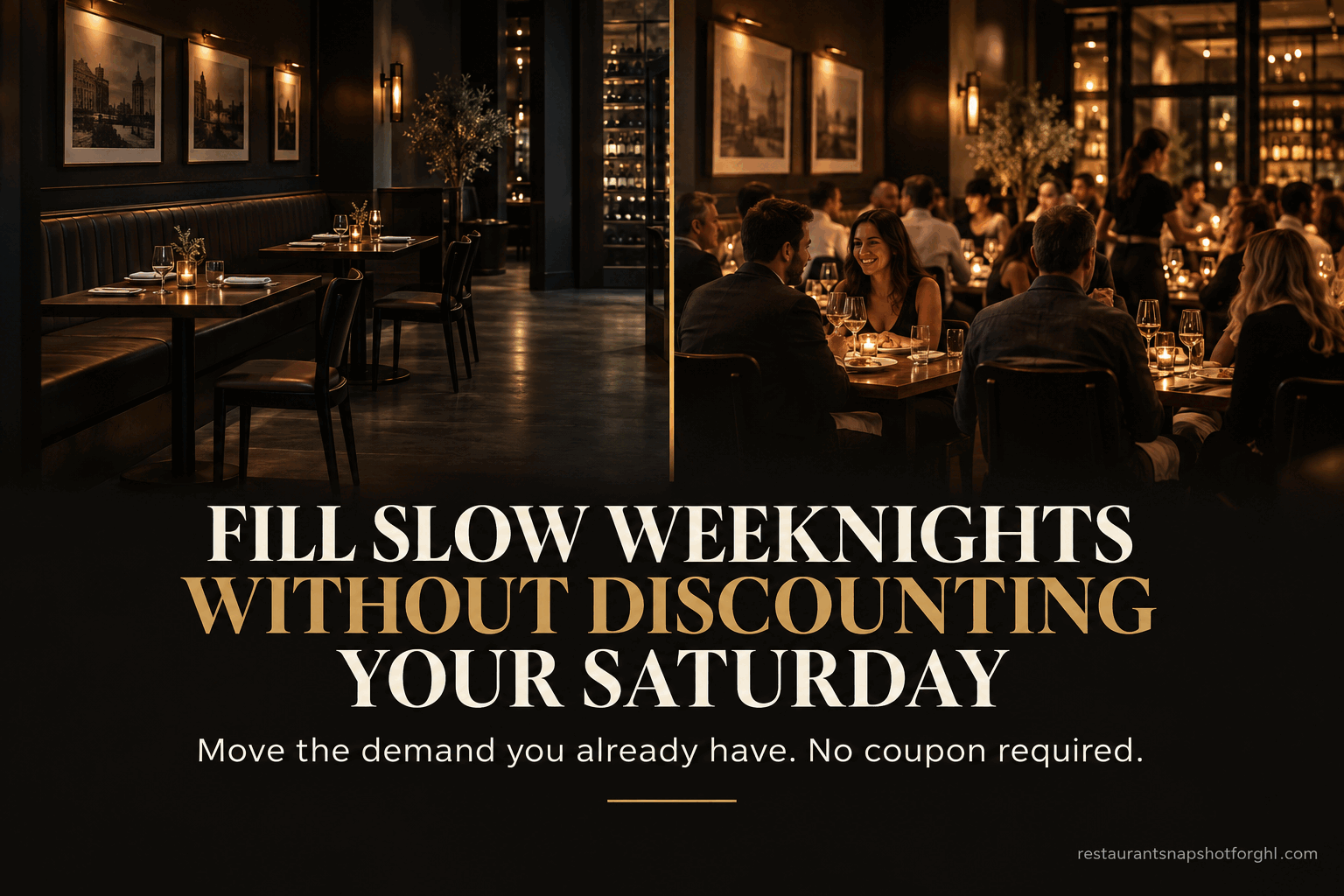
How to Fill Slow Weeknights Without Discounting Your Saturday
A dead Tuesday does not need a coupon. Here is the complete operator system to fill slow weeknights with the guests you already have, using segmented texts, a birthday club, and win-backs, without training your regulars to wait for a discount and without touching your Saturday margin.
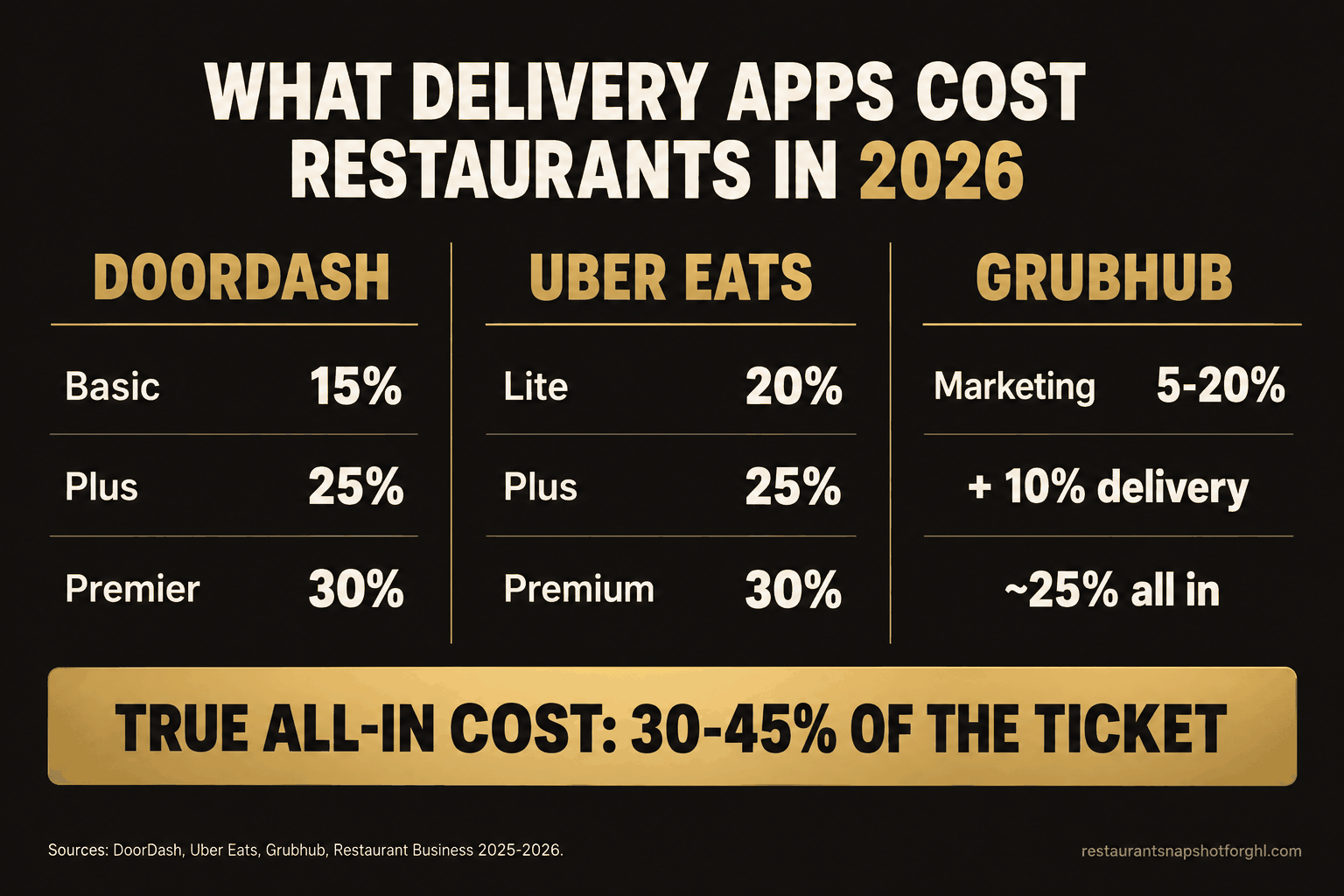
What DoorDash, Uber Eats, and Grubhub Really Cost Your Restaurant (and How to Run the Numbers Yourself)
The published commission is never the bill. Here is what DoorDash, Uber Eats, and Grubhub actually charge an independent restaurant in 2026, the fees that push the real cost to 30-45%, a worksheet to price your own orders, and how to move guests to a channel you own.
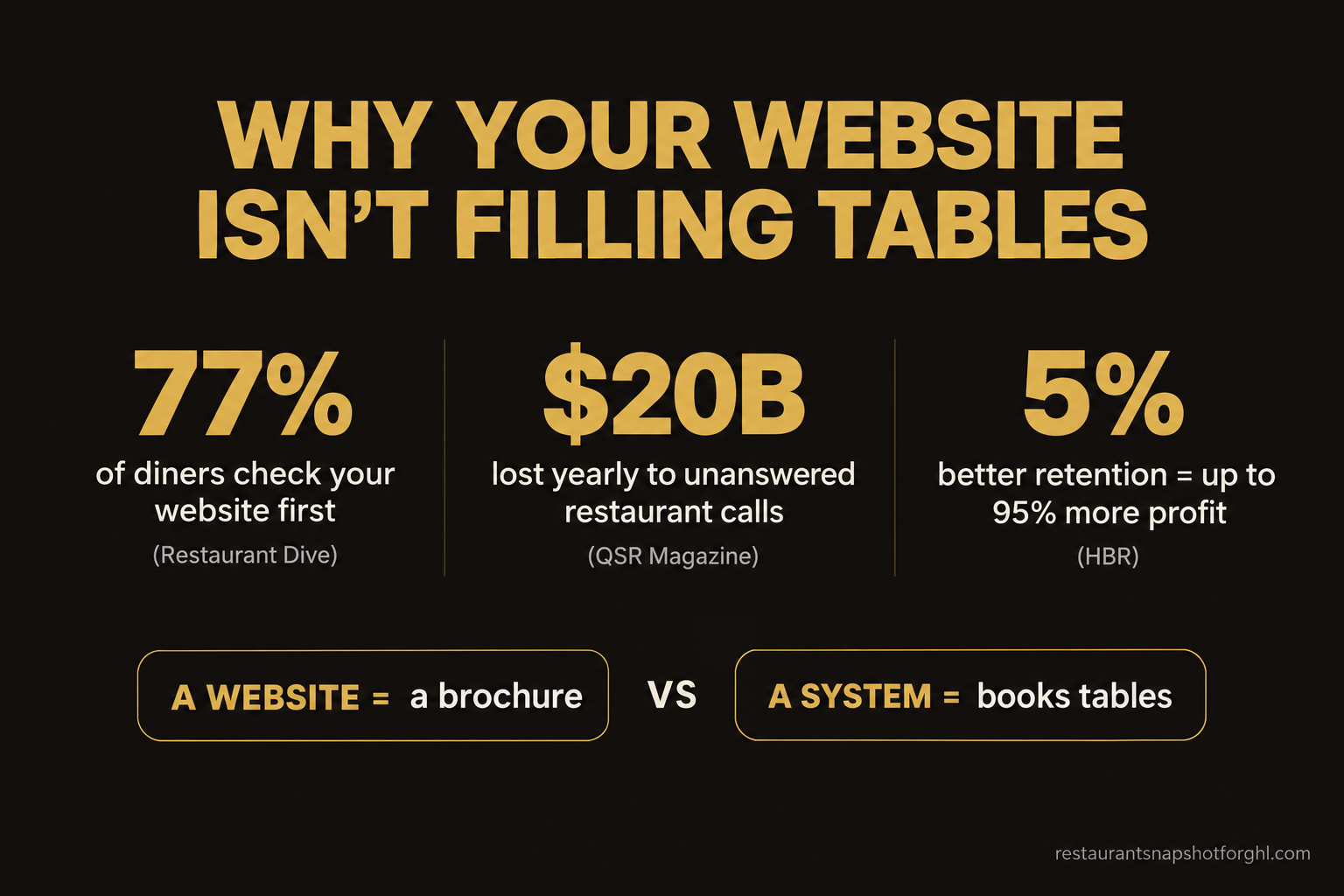
Why Your Restaurant Website Isn't Bringing In Diners (and What Actually Does)
You paid for a good-looking restaurant website and covers didn't budge. That is not a design problem. A website is a destination, and nobody drives to a destination they can't find, can't book from their phone, and never hears from again. Here is what a website really does, the five reasons yours isn't moving covers, and the capture-and-return system that turns visits into booked tables and repeat regulars.
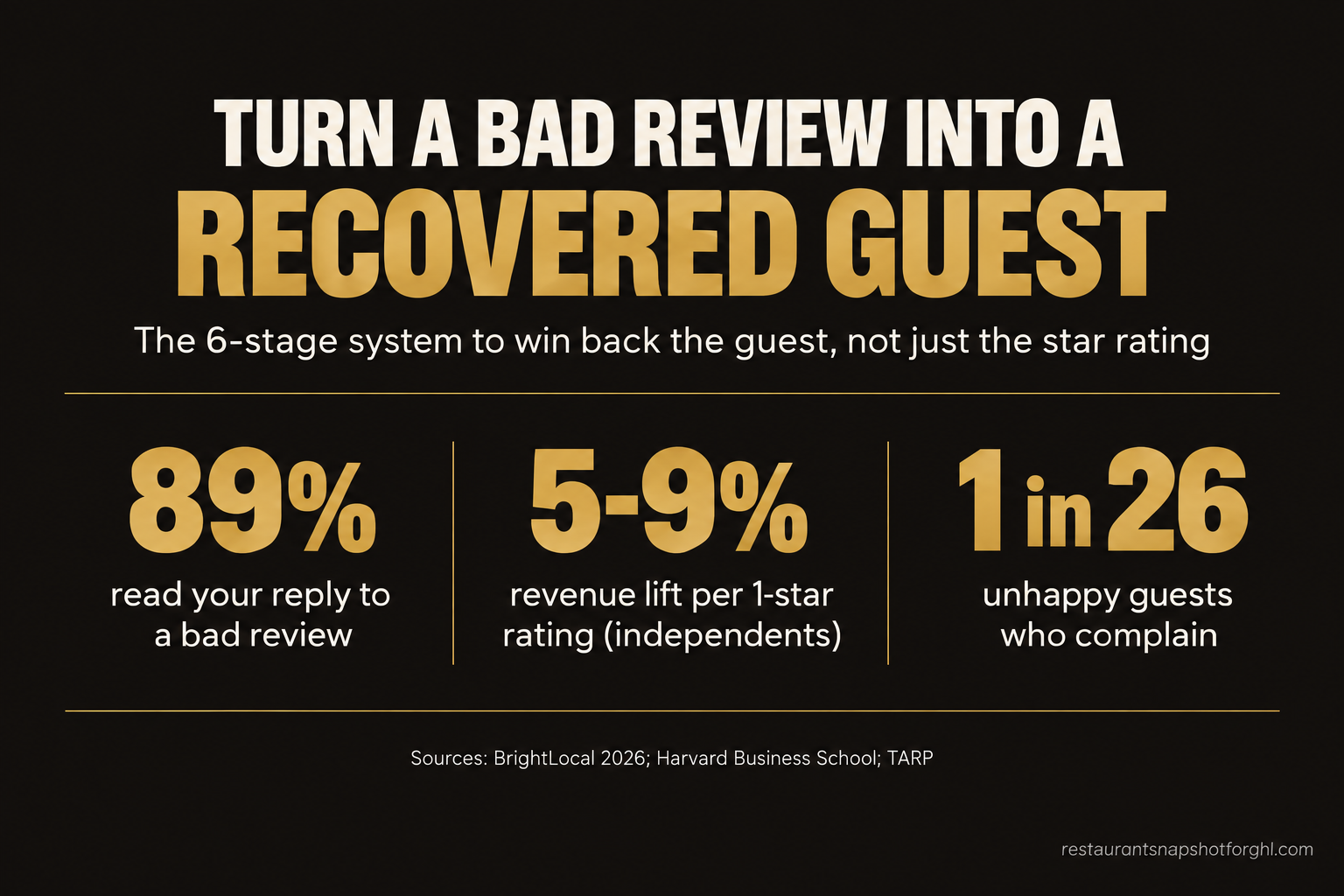
How to Turn a Bad Restaurant Review Into a Recovered Guest
Most operators treat a one-star review as a fire to put out. It is really a guest handing you the reason they left, in writing. Here is the step-by-step system to reply the right way, reach the guest privately, make it right, and get them back through the door, so a bad night becomes a recovered regular instead of lost revenue.
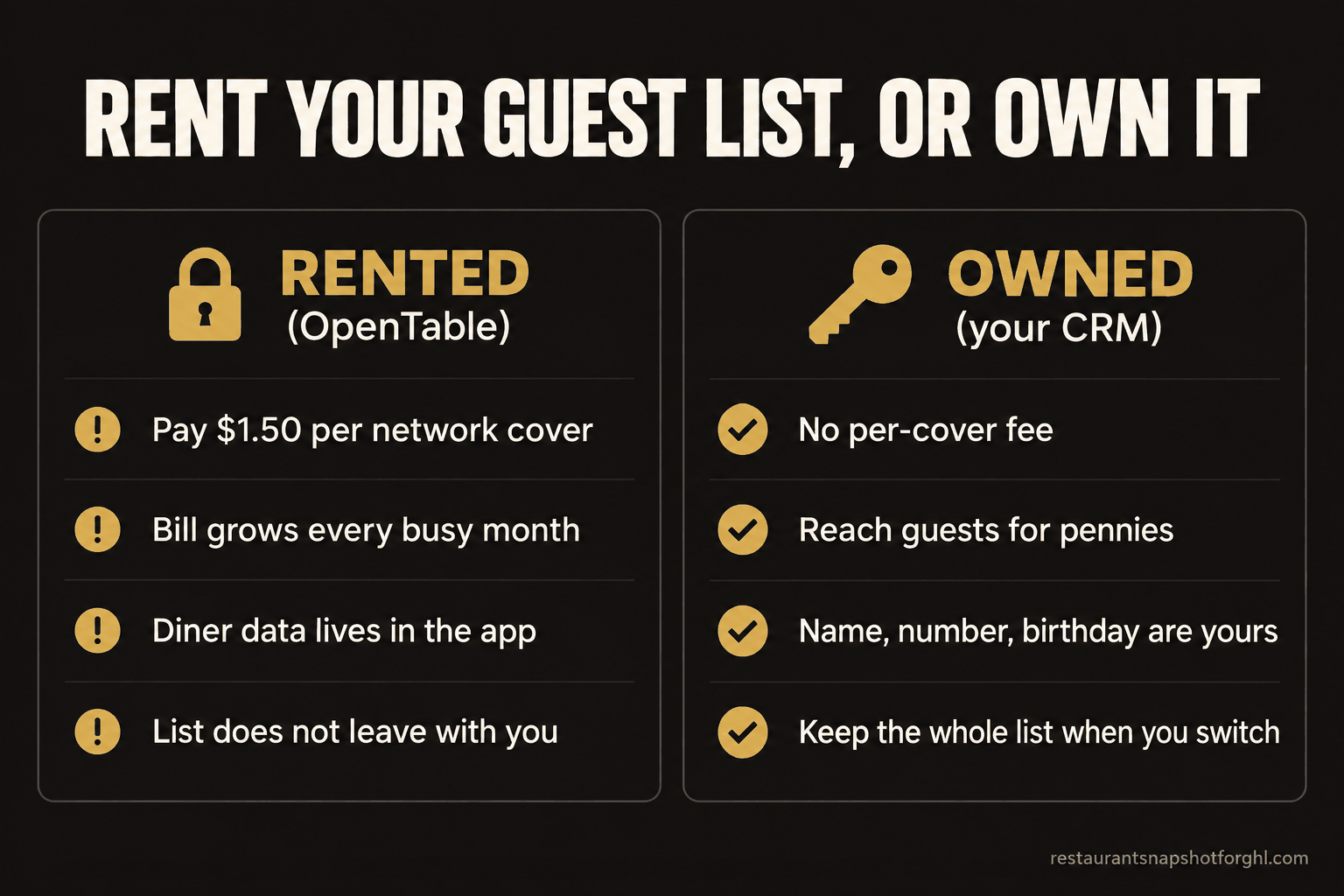
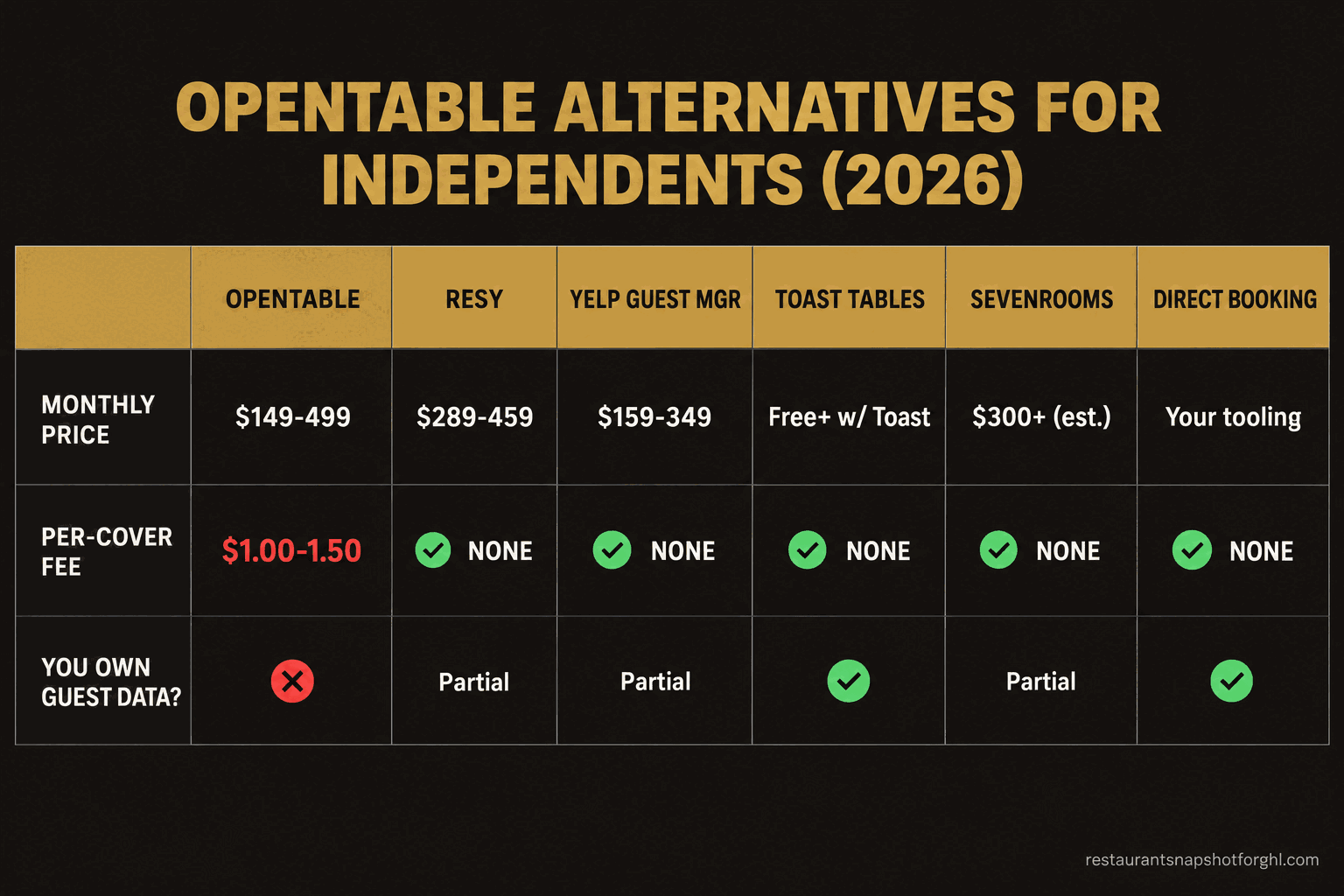
How to Own Your Restaurant's Guest List Instead of Renting It From OpenTable
You do not have a marketing problem. You have an ownership problem. Here is the step-by-step system for building a first-party restaurant guest list you actually own, so you can fill slow nights with the diners you already earned, market to them for free, and keep the whole list when you switch platforms.
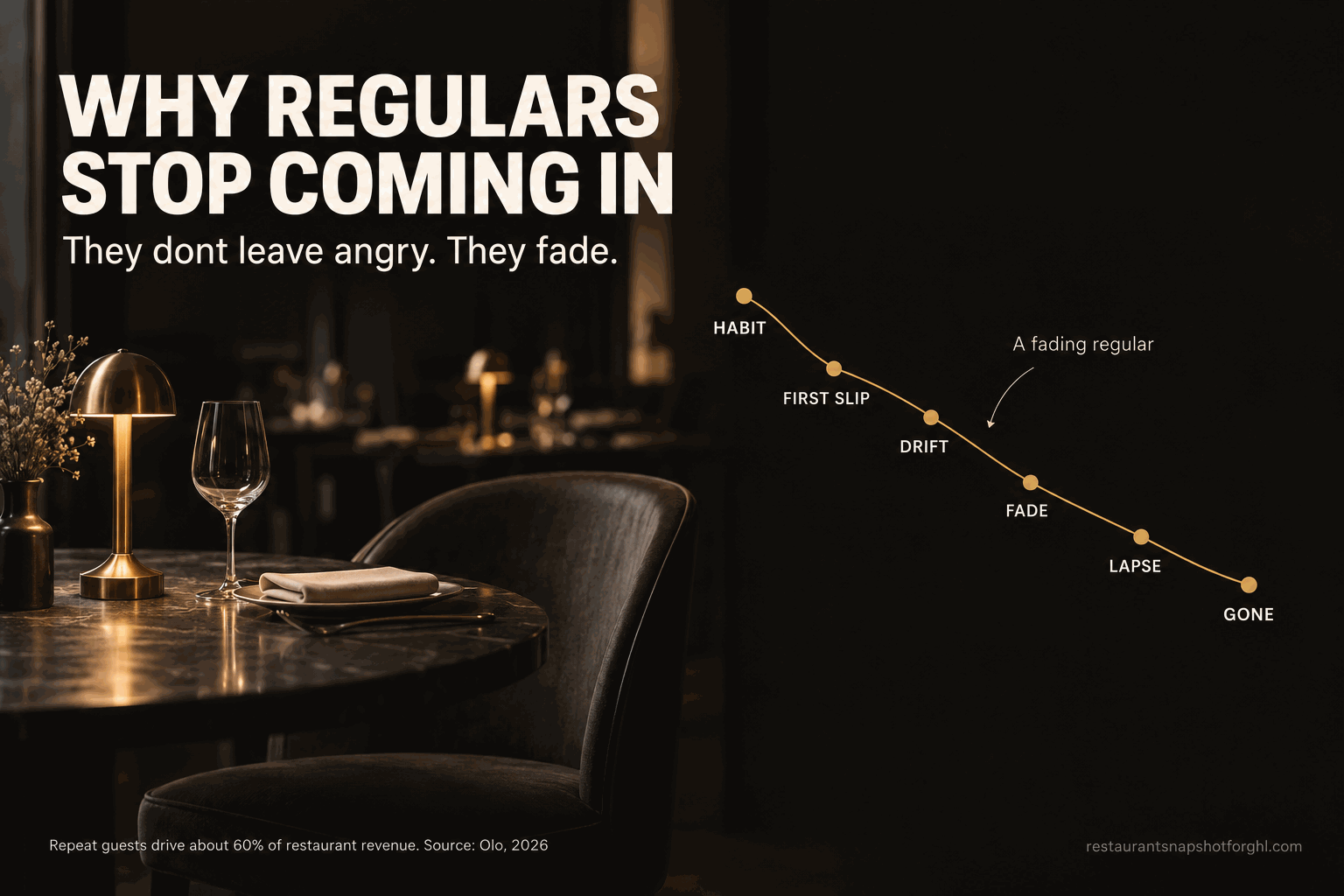
Why Regulars Stop Coming In (and Never Tell You)
Your best regulars almost never quit in anger. They quietly fade, and you find out months later when the section that was always full on Thursday goes quiet. Here's why it happens, how to catch it in the first 30 days, and the system that brings a fading regular back before they're gone for good.
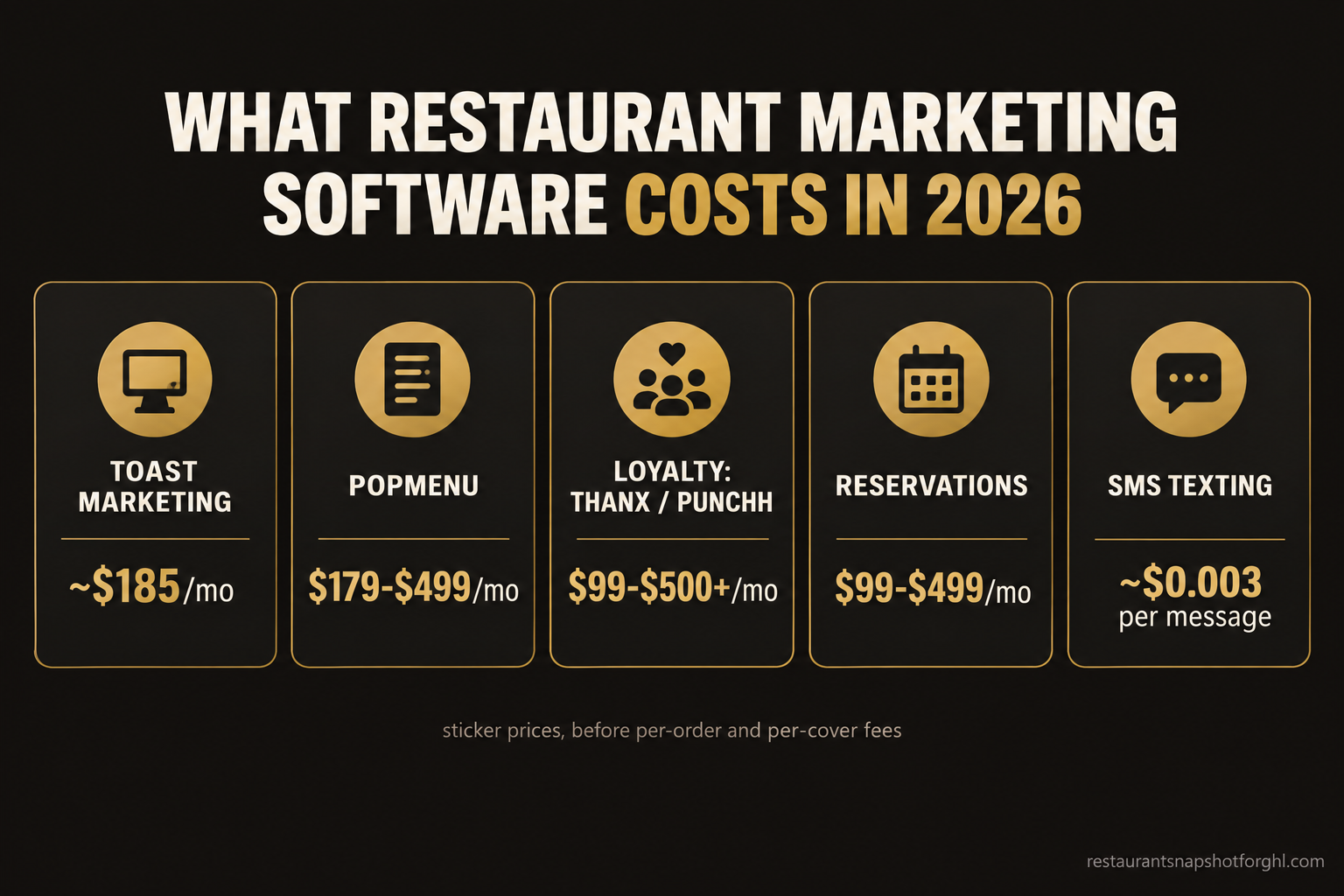
What Restaurant Marketing Software Actually Costs in 2026 (Toast, Popmenu, and the Hidden Add-Ons)
What restaurant marketing software really costs in 2026: Toast Marketing, Popmenu, loyalty and SMS fees, the hidden per-order and per-message add-ons, and three honest budgets for an independent operator who is done overpaying.
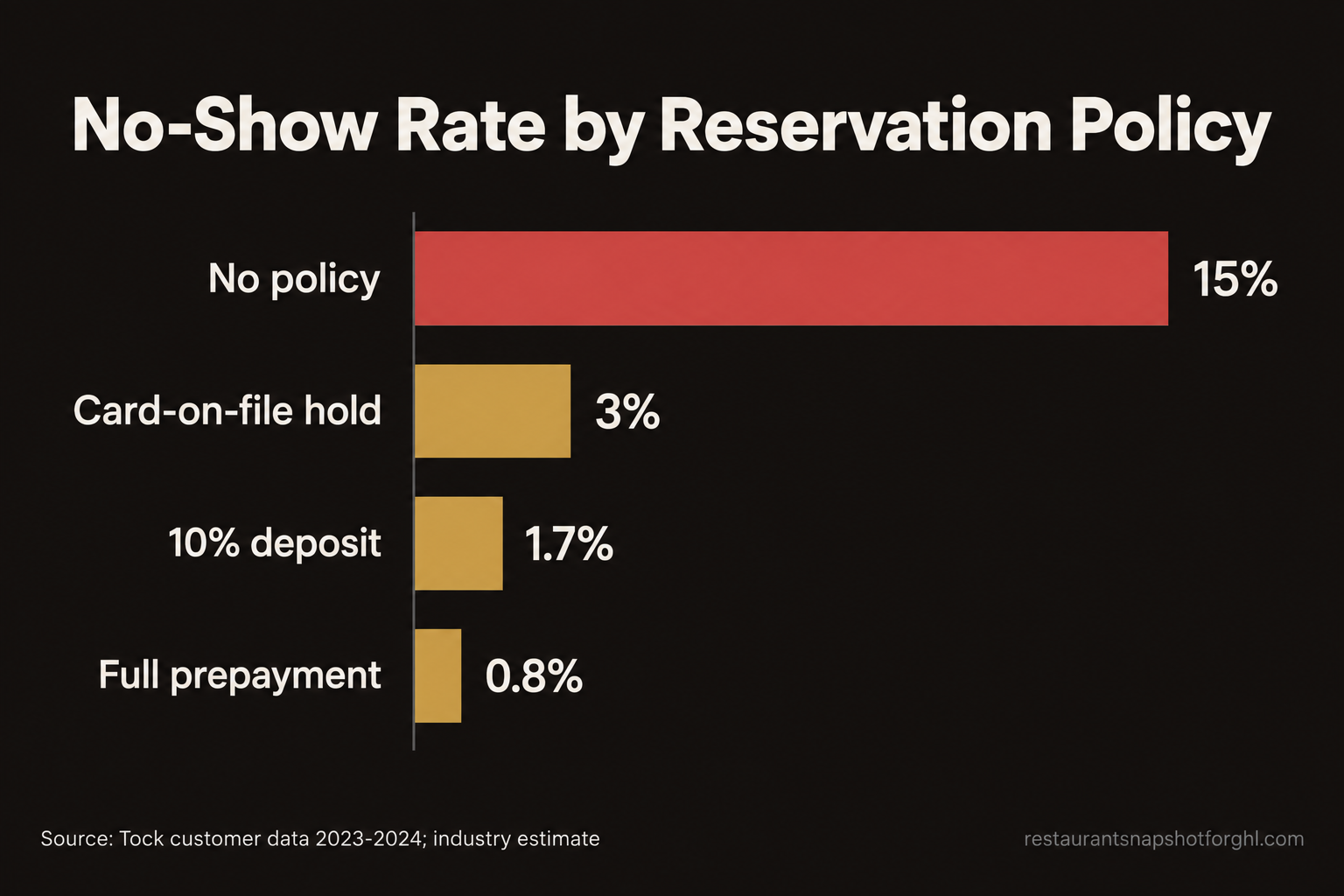
Restaurant No-Show Policy for Large Parties: The Templates Guests Actually Accept
A no-show policy for large parties that guests accept, not resent. Card-on-file versus deposit, the right cancellation window, TCPA-safe reminder texts, and the exact policy wording you can copy tonight.